ZWO Guide Scope: A Comprehensive Guide (Updated 01/27/2026)
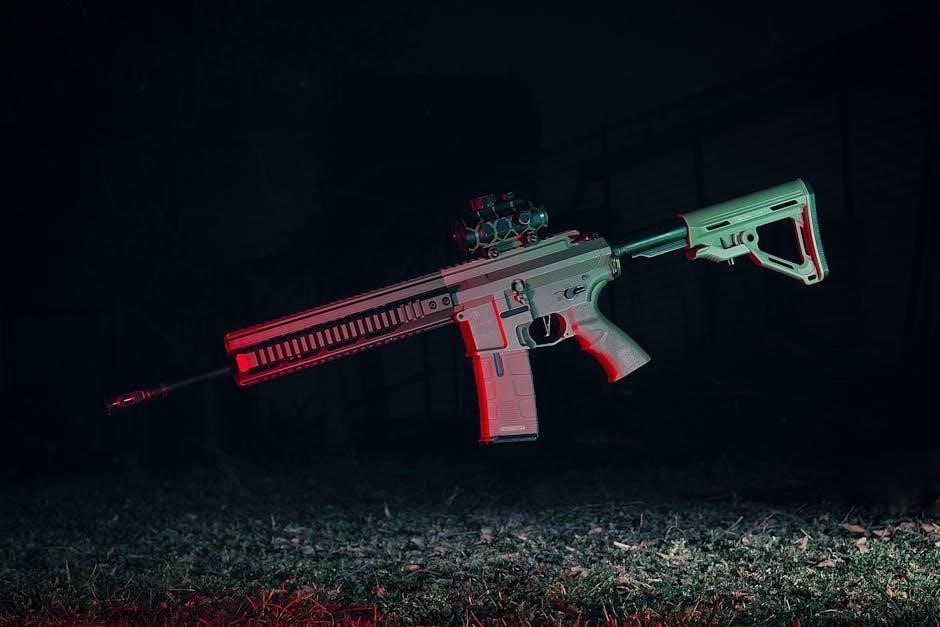
ZWO’s guide scopes, like the 30mm F/5 Mini, offer astrophotographers pinpoint stars and high precision, enhancing tracking for both beginners and experienced users.
ZWO has rapidly become a prominent name in astrophotography, and their guide scopes are a key component of their success. These scopes are meticulously engineered to provide astrophotographers with the accuracy and stability needed for long-exposure imaging. The introduction of models like the 30mm F/5 Mini demonstrates ZWO’s commitment to innovation, featuring triplet optics and upgraded focusers.
Whether you’re a seasoned astrophotographer or just beginning, ZWO offers a guide scope solution tailored to your needs. They are designed to work seamlessly with ZWO guide cameras, creating a cohesive and high-performing system. Expect sharp, pinpoint stars and enhanced tracking precision with these scopes.
What is a Guide Scope and Why Do You Need One?
A guide scope is a small, dedicated telescope used alongside your main imaging telescope to ensure accurate tracking during long-exposure astrophotography. It works by isolating a guide star and monitoring its position, sending corrections to your mount to counteract any drift. Without a guide scope, even minor imperfections in your mount’s tracking can result in blurry images.
ZWO guide scopes, like their compact 30mm model, are crucial for achieving pinpoint stars. They enhance precision, especially when paired with ZWO guide cameras, offering a reliable solution for both beginners and experienced astrophotographers.
ZWO as a Leading Manufacturer of Guide Scopes
ZWO has rapidly become a prominent manufacturer in the astrophotography market, renowned for producing high-quality, innovative guide scopes. Their commitment to optical excellence is evident in models like the 30mm F/5 Mini, featuring advanced triplet optics and upgraded focusers. ZWO consistently delivers precision instruments at competitive prices, making astrophotography more accessible.
They offer a comprehensive range, catering to diverse needs, and are praised for their user-friendly designs and seamless integration with their own guide cameras and software platforms like ASIAIR.

ZWO Guide Scope Models: Overview
ZWO offers a range of guide scopes, including the compact 30mm F/5 Mini and the 50mm option, designed for pinpoint accuracy and enhanced tracking.
ZWO 30mm F/5 Mini Guide Scope: Key Features
The ZWO 30mm F/5 Mini Guide Scope represents a significant upgrade in guiding technology, delivering high-precision performance in a remarkably compact package. This latest iteration boasts advanced triplet optics, ensuring sharper, more defined stars for accurate tracking. An upgraded focuser provides smoother, more precise adjustments, crucial for achieving optimal focus.
Its lightweight design makes it ideal for various telescope setups, minimizing strain on your mount. The longer focal length contributes to a narrower field of view, enhancing guiding accuracy. This scope is a fantastic solution for both novice and experienced astrophotographers seeking reliable and efficient guiding capabilities.
ZWO 50mm Guide Scope: A Wider Field of View
While information specifically detailing a dedicated “ZWO 50mm Guide Scope” is limited in the provided text, we can infer its benefits based on general guiding principles; A 50mm aperture, compared to the 30mm Mini, would offer a significantly wider field of view. This broader perspective simplifies locating and maintaining guide stars, particularly when using cameras with smaller sensors or when dealing with fast focal ratio telescopes.
The larger aperture also gathers more light, potentially aiding in guiding under less-than-ideal conditions. It’s a robust option for those prioritizing ease of use and a generous search area for suitable guide stars, complementing ZWO’s existing guiding solutions.
Comparing ZWO Guide Scope Options
ZWO currently presents the 30mm F/5 Mini Guide Scope as a key offering, lauded for its triplet optics and improved focuser. When comparing options, consider your setup’s needs. The 30mm excels in portability and precision, ideal for compact rigs. A potential 50mm model (though details are scarce) would prioritize a wider field of view, simplifying guide star acquisition.
Ultimately, the choice hinges on balancing portability, ease of use, and guiding accuracy. Remember that even inexpensive guide scopes can perform well with careful focusing, despite potentially less refined optics.

Technical Specifications & Optics
ZWO guide scopes feature triplet or doublet optical designs, varying focal lengths, and ratios like F/5, impacting guiding performance and compatibility with cameras.
Aperture and Focal Length Considerations
ZWO guide scopes offer varied apertures and focal lengths, crucial for optimal guiding. A smaller aperture, like the 30mm model, provides a wider field of view, simplifying target acquisition, especially with slower focal ratio telescopes. Conversely, a larger aperture gathers more light, potentially aiding in finding suitable guide stars in challenging conditions. Focal length directly impacts the image scale; longer focal lengths yield higher magnification, demanding precise focusing. Selecting the appropriate combination depends on your telescope’s focal length, camera pixel size, and desired guiding accuracy. Balancing these factors ensures reliable and effective autoguiding performance for astrophotography.
Optical Design: Triplet vs. Doublet
ZWO’s guide scopes utilize both doublet and triplet optical designs. Doublet designs, employing two lens elements, are more affordable but can exhibit chromatic aberration, potentially impacting guiding accuracy. Triplet designs, incorporating three lens elements, significantly reduce chromatic aberration, delivering sharper, more contrast-rich images and pinpoint stars. The 30mm F/5 Mini guide scope features an advanced triplet design for enhanced performance. While doublets suffice for basic guiding, triplets are preferred for demanding applications and larger telescopes, ensuring optimal autoguiding precision and minimizing image distortions.
Focal Ratio and its Impact on Guiding
The focal ratio of a ZWO guide scope, like the 30mm F/5 Mini, directly influences its field of view and guiding sensitivity. A lower focal ratio (e.g., F/5) provides a wider field, making it easier to locate guide stars, especially with smaller sensors. However, a longer focal ratio offers greater magnification, potentially improving guiding precision. The optimal choice depends on the camera’s sensor size and the desired guiding accuracy. ZWO balances these factors, offering scopes with ratios suited for various setups, ensuring reliable autoguiding performance.
Optical Coatings and Light Transmission
ZWO guide scopes utilize multi-layer optical coatings on their lenses to maximize light transmission and minimize reflections. These coatings are crucial for ensuring bright, clear images of guide stars, even under less-than-ideal conditions. Enhanced light transmission improves the signal-to-noise ratio, leading to more accurate guiding. The quality of these coatings directly impacts the scope’s ability to deliver sharp, pinpoint stars, essential for precise astrophotography. ZWO prioritizes high-quality coatings to optimize performance and reliability.

Mounting and Compatibility
ZWO guide scopes readily integrate with standard guide scope rings and brackets, ensuring compatibility with various telescope types and ZWO guide cameras.
Guide Scope Rings and Brackets
Securing your ZWO guide scope requires appropriate rings and brackets, vital for stable mounting to your telescope. Standard dovetail or tube rings generally offer excellent compatibility, allowing for flexible positioning and alignment. Consider the scope’s diameter when selecting rings; ensure a snug, yet non-constricting fit. Brackets facilitate attachment to the main telescope’s optical tube assembly or directly to the mount.
Look for rings with adjustable clamps for precise alignment and minimizing flexure. Some brackets offer fine adjustment capabilities, aiding in achieving optimal guiding performance. Quality materials, like aluminum, provide durability and stability, crucial for long-exposure astrophotography. Proper installation and tightening are essential for a secure and vibration-free setup.
Compatibility with ZWO Guide Cameras
ZWO guide scopes are designed with seamless compatibility in mind for their range of guide cameras, like the ASI120MM Mini. Most models feature a standard drawtube accepting 1.25” accessories, readily accommodating ZWO camera nosepieces with appropriate adapters. Ensuring proper back focus is crucial; extension tubes may be needed depending on the camera and scope combination.
The compact design of the 30mm scope pairs well with mini cameras, while larger 50mm scopes offer greater flexibility. Verify thread compatibility when attaching cameras and accessories. ZWO’s ecosystem simplifies integration, providing a reliable guiding solution for astrophotography.
Mounting to Different Telescope Types
ZWO guide scopes offer versatile mounting options for various telescope types. Utilizing guide scope rings and brackets, they securely attach to the main telescope’s optical tube assembly or directly to the mount. Compatibility exists with refractors, reflectors, and Schmidt-Cassegrain telescopes.
For larger telescopes, robust rings are recommended. Ensure balanced weight distribution to prevent strain on the mount. Proper alignment with the main telescope’s optical axis is vital for accurate guiding. Consider dovetail mounting options for quick attachment and detachment during setup and transport.
Helical Focuser Adjustments and Precision
ZWO guide scopes feature helical focusers, crucial for achieving pinpoint stars. Precise focusing is paramount for accurate guiding, demanding careful adjustments. The helical focuser allows for fine-tuning, enabling sharp image acquisition of distant stars. Slow, deliberate turns are key to finding the optimal focus point.
Avoid overshooting the focus; small increments yield the best results. Regularly check focus, especially with temperature changes. Some users may benefit from adding a micro-focuser for even greater precision, enhancing overall guiding performance and image quality.

Guiding Performance & Accuracy
ZWO guide scopes deliver exceptional tracking precision, vital for astrophotography. Achieving pinpoint stars through careful focusing ensures accurate guiding and minimizes tracking errors.
Achieving Pinpoint Stars for Accurate Guiding
ZWO guide scopes excel at delivering the sharp, pinpoint stars necessary for precise astrophotography guiding. While incredibly capable, these smaller scopes require meticulous focusing; don’t assume image quality solely based on the guide scope. Careful attention to focus is paramount, as even inexpensive, short-focus models can perform admirably with proper setup. The goal isn’t necessarily perfect stars, but consistent, well-defined points of light for the guiding software to track. Regularly verify focus with your ZWO camera to ensure optimal performance and minimize frustrating tracking issues, ultimately leading to clearer, more detailed astrophotos.
The Importance of Proper Focusing
Proper focusing is absolutely critical when utilizing a ZWO guide scope for accurate astrophotography. These smaller scopes, while convenient, demand careful attention to detail during the focusing process. It’s easy to misjudge focus, so diligent verification with your ZWO guide camera is essential. Remember, pinpoint stars aren’t always mandatory for successful guiding, but a sharp, well-defined star image significantly improves tracking precision. Regularly check and refine focus, especially before long exposures, to minimize tracking errors and ensure consistently clear, high-quality astrophotographic results.
Software Integration: ASIAIR and Other Platforms
ZWO guide scopes seamlessly integrate with popular astrophotography software platforms, notably the ASIAIR system. This allows for automated guiding calibration and real-time adjustments, optimizing tracking performance. Beyond ASIAIR, compatibility extends to other guiding software, enabling users to tailor their setup to their preferences. Successful integration requires proper camera recognition and configuration within the chosen software. Utilizing these platforms unlocks the full potential of your ZWO guide scope, delivering precise and reliable guiding for stunning astrophotography results, simplifying complex processes.
Dealing with Atmospheric Conditions
Atmospheric turbulence significantly impacts guiding accuracy with any setup, including ZWO guide scopes. Seeing conditions, such as cloud cover and air currents, can introduce errors in star positioning. Employing longer guide exposures can mitigate some effects, but finding the optimal balance is crucial. Regularly recalibrating your guiding system helps compensate for changing atmospheric conditions. Furthermore, utilizing software features like PHD2’s atmospheric refraction correction can improve guiding precision. Patience and adaptability are key to achieving consistent results despite challenging atmospheric conditions when using a ZWO guide scope.
ZWO Guide Scope Accessories
ZWO guide scope performance is enhanced with accessories like extension tubes for back focus, field flatteners for wider views, and dew shields for clear imaging.
Extension Tubes for Adjusting Back Focus
ZWO guide scopes, particularly when paired with certain cameras or accessories, may require adjustments to the back focus. Extension tubes become essential tools in these scenarios, allowing astrophotographers to precisely position the sensor for optimal image clarity. These tubes effectively increase the distance between the guide scope and the camera, ensuring the focal plane aligns perfectly with the imaging sensor.
Proper back focus is crucial for achieving sharp, well-defined guide stars. Without it, images can appear blurry, hindering accurate tracking and potentially compromising long-exposure astrophotography. ZWO offers a range of extension tube options, catering to various setups and camera combinations, enabling users to fine-tune their guiding systems for peak performance.
Field Flatteners for Wider Fields
While ZWO guide scopes excel in precision, achieving a perfectly flat field across the entire imaging area can sometimes be challenging, especially with wider fields of view. Field flatteners address this issue by correcting optical aberrations that cause distortion towards the edges of the image. These accessories are particularly beneficial when using a guide scope for off-axis guiding or when maximizing the usable sensor area.
By minimizing curvature and distortion, field flatteners ensure that guide stars remain consistently sharp and well-focused, leading to more accurate tracking and improved astrophotography results. ZWO’s commitment to optical quality extends to compatible field flattener options, enhancing the performance of their guide scope systems.
Dew Shields to Prevent Condensation
A crucial accessory for any outdoor astrophotography setup, including those utilizing ZWO guide scopes, is a dew shield. These cylindrical extensions attach to the front of the guide scope and effectively block stray light, but more importantly, prevent condensation from forming on the objective lens. Dew formation can severely degrade image quality and hinder accurate guiding.
By shielding the lens from ambient temperature fluctuations and ground radiation, dew shields maintain a more consistent temperature, minimizing the risk of dew. ZWO offers compatible dew shields designed to fit their guide scope models, ensuring optimal performance even in humid conditions, leading to clearer guiding stars.
Troubleshooting Common Issues
Common problems with ZWO guide scopes include focusing issues, tracking errors, and flexure; careful calibration and verification of image quality are essential.
Focusing Problems and Solutions
Achieving sharp focus with a ZWO guide scope can be surprisingly challenging, especially with shorter focal length models. Users report needing meticulous adjustments due to the small sensor size and potentially lower quality optics in some configurations. Carefully examine the star shapes – pinpoint stars are the goal, but don’t obsess over perfection, as guiding doesn’t require absolutely perfect stars.
Solutions include utilizing a precise helical focuser, ensuring proper back focus with extension tubes, and employing software assistance like ASIAIR for automated focusing routines. Double-check focus before assuming image quality issues stem from elsewhere in your setup. Remember, patience and iterative adjustments are key!
Tracking Errors and Guiding Calibration
Even with a quality ZWO guide scope, tracking errors can occur due to mount imperfections, polar alignment issues, or atmospheric disturbances. Proper guiding calibration is crucial to mitigate these. Software like PHD2 Guiding allows you to tune parameters like aggressiveness and hysteresis to optimize corrections.
Rare star trails suggest a well-calibrated system, but persistent errors necessitate revisiting polar alignment or checking for mechanical flexure. Regularly monitor guiding graphs to identify patterns and adjust calibration settings accordingly. A stable setup and accurate calibration are paramount for long-exposure astrophotography.
Dealing with Flexure and Stability
Flexure, or bending, in your imaging train can introduce guiding errors, even with a precise ZWO guide scope. Ensure all connections – guide scope rings, camera adapters, and focuser – are securely tightened. Longer guide scopes are more susceptible, so robust mounting is vital.
Check for play in your mount’s dovetail clamp and consider adding a guide scope bracket that minimizes leverage. Stability is also key; avoid vibrations from nearby traffic or wind. Regularly inspect your setup for loose components and address them promptly for optimal guiding performance.
Image Quality Concerns and Verification
While pinpoint stars are desired for guiding, inexpensive, short-focus guide scopes like some ZWO models don’t always deliver exceptional optics. Don’t immediately assume poor guiding performance indicates a problem with your main imaging setup. Carefully verify focus using a Bahtinov mask or similar tool.
Ensure the guide star is round and well-defined. Remember, successful guiding doesn’t require perfect images; it needs consistent star positioning. Prioritize accurate focusing over chasing absolute image perfection within the guide scope’s view.
ZWO Guide Scope vs. Off-Axis Guiders
ZWO guide scopes offer a dedicated guiding solution, while off-axis guiders utilize the main telescope’s light path; each method presents unique pros and cons.
Pros and Cons of Each System
ZWO guide scopes, such as the 30mm F/5 Mini, provide a separate optical path for guiding, simplifying setup and often delivering brighter guide stars. However, they add weight and require precise alignment. Off-axis guiders (OAGs) utilize light from the main telescope, eliminating additional optics and potential flexure, but can be more complex to align and may struggle with faint stars.
OAGs also reduce light reaching the imaging sensor. While inexpensive short-focus guide scopes don’t have great optics, they are still capable of accurate guiding. Ultimately, the best choice depends on your telescope, mount, and imaging goals, balancing simplicity, accuracy, and cost-effectiveness.
Choosing the Right Guiding Method for Your Setup
Selecting between a ZWO guide scope and an off-axis guider (OAG) hinges on your astrophotography setup. For wider-field imaging with shorter focal lengths, a ZWO mini guide scope like the 30mm F/5 offers a cost-effective and straightforward solution. If you have a longer focal length telescope, an OAG might be preferable, minimizing flexure.
Consider your mount’s accuracy; a precise mount may require less aggressive guiding. Remember, pinpoint stars aren’t always necessary for effective guiding, and careful focusing is crucial with any system. Evaluate your budget and desired level of complexity before deciding.

User Reviews and Community Feedback
ZWO guide scopes receive positive feedback for their affordability and performance, particularly the 30mm model, proving capable for wide-field astrophotography setups and rare star trails.
Real-World Experiences with ZWO Guide Scopes
Astrophotographers consistently report successful guiding experiences utilizing ZWO guide scopes paired with various telescope and mount combinations. One user detailed a setup with a Sky-Watcher Esprit 100 ED telescope and an EQ6-R Pro mount, successfully employing a ZWO guide camera within a 60mm StarField guide scope. Another user achieved reliable tracking with a ZWO ASI120MM Mini, coupled with a William Optics 32mm Uniguide scope, and an Orion Sirius EQ-G mount.
Despite inexpensive optics, users find these scopes capable, though careful focusing is crucial. While pinpoint stars aren’t always necessary for effective guiding, verifying focus on the ZWO camera itself is recommended to ensure optimal image quality and accurate tracking performance.
Popular Forums and Online Resources
Astrophotography enthusiasts actively discuss ZWO guide scopes on various online platforms. Dedicated forums, such as Cloudy Nights and Stargazers Lounge, feature extensive threads detailing user experiences, setup configurations, and troubleshooting tips. Reddit’s r/astrophotography also provides a vibrant community for sharing insights and seeking advice regarding ZWO products.
ZWO’s official website and social media channels offer valuable resources, including product manuals, software updates, and customer support. Numerous YouTube channels showcase practical demonstrations and reviews of ZWO guide scopes, aiding informed purchasing decisions.

Future Trends in ZWO Guide Scope Technology
ZWO may innovate with lighter materials, improved optical coatings, and smarter software integration for enhanced guiding precision and ease of use in future scopes.
Potential Innovations and Improvements
Looking ahead, ZWO could focus on several key areas to elevate their guide scope technology. Expect advancements in apochromatic designs to minimize chromatic aberration, resulting in sharper guiding stars. Lighter-weight materials, such as carbon fiber, could reduce payload on mounts, improving responsiveness. Enhanced optical coatings will maximize light transmission for fainter guide stars.
Furthermore, integrating artificial intelligence for automated focusing and real-time error correction presents exciting possibilities. Miniaturization, building upon the success of the 30mm model, could lead to even more compact and portable solutions. Finally, seamless compatibility with evolving software platforms like ASIAIR will remain crucial for a user-friendly experience.
The Evolution of Guiding Systems
Guiding has dramatically evolved from manual corrections to sophisticated automated systems. Initially, off-axis guiders dominated, but dedicated guide scopes, like those from ZWO, gained prominence due to their simplicity and affordability. Early guide scopes often suffered from optical limitations, but advancements in triplet optics, as seen in ZWO’s newer models, significantly improved accuracy.
The integration of dedicated guide cameras and software, such as ASIAIR, further refined the process. Today’s systems prioritize ease of use and precision, enabling longer exposures and sharper astrophotography results. ZWO continues to push boundaries with compact, high-performance solutions.