
The 10-Meter Walk Test (10MWT) is a widely used, simple assessment for evaluating functional mobility, particularly in neurological and orthopedic populations.
A PDF protocol ensures standardized administration, crucial for reliable data collection and comparison across diverse patient groups and research studies.
Stroke-specific protocols, including those for individuals with aphasia, are increasingly available in PDF format to enhance accessibility and usability.
What is the 10MWT?
The 10-Meter Walk Test (10MWT) is a performance-based measure used to assess a patient’s functional walking ability. It’s a relatively quick and easy test, making it practical for various clinical settings. The test involves instructing the patient to walk a 10-meter distance at their self-selected, maximum speed.
A PDF version of the 10MWT protocol provides a standardized format for administering the test, ensuring consistency across different examiners and locations. This standardization is vital for reliable data collection and interpretation. The PDF often includes detailed instructions, scoring guidelines, and a data recording sheet.
Researchers and clinicians utilize the 10MWT to quantify changes in gait speed and identify functional limitations. It’s commonly employed in stroke rehabilitation, post-operative orthopedic care (like total hip arthroplasty), and pediatric assessments.
Purpose of the Test
The primary purpose of the 10-Meter Walk Test (10MWT) is to quantify a patient’s walking speed, a key indicator of functional mobility and independence. This simple test helps clinicians assess a patient’s ability to perform activities of daily living that require walking.
A well-structured PDF protocol enhances the test’s utility by providing clear guidelines for administration and interpretation. This ensures consistent data collection, crucial for tracking patient progress and evaluating treatment effectiveness. The PDF format facilitates easy access and dissemination of standardized procedures.
Furthermore, the 10MWT aids in identifying functional limitations and monitoring changes over time, particularly in populations like stroke survivors and post-arthroplasty patients.
Relevance of a PDF Format for Protocols
Utilizing a PDF format for 10-Meter Walk Test (10MWT) protocols offers significant advantages in standardization and accessibility. A PDF ensures consistent presentation of instructions, minimizing variability in test administration across different clinicians and settings.
The PDF format allows for easy distribution and archiving of the protocol, facilitating research and quality assurance. It can incorporate essential elements like patient information sections, detailed test administration guidelines, and standardized data recording sheets.
Moreover, PDFs are readily portable and can be accessed on various devices, promoting widespread adoption and adherence to best practices in functional assessment.

Understanding the Basics of the 10MWT
The 10MWT requires minimal equipment – a measured walkway, timer, and potentially assistance. A PDF protocol details these needs, ensuring standardized testing procedures.
Required Equipment
Essential equipment for administering the 10-Meter Walk Test (10MWT) is remarkably simple, contributing to its widespread usability. Primarily, a PDF protocol will emphasize the need for a precisely measured walkway – typically 10 meters in length, though variations exist as noted in research.
A reliable timing device, accurate to at least 0.01 seconds, is crucial for recording walking speed. Furthermore, clear markings to designate the start and stop points (often a 2-meter mark for acceleration/deceleration) are necessary.
A PDF version of the protocol may also include a standardized data recording sheet for consistent documentation of results. Finally, depending on the patient population, appropriate assistive devices (walkers, canes) may be required, as outlined within the PDF guidelines.
Standard Walkway Dimensions
The 10-Meter Walk Test (10MWT) typically utilizes a straight, flat walkway measuring 10 meters in length, though research indicates variations like 15 or 30-meter walkways are sometimes employed, particularly for specific populations. A PDF protocol will detail these acceptable dimensions.
The walkway should be at least 1 meter wide to allow for comfortable and safe ambulation. Clear markings are essential, and a PDF guide will specify the need for a clearly defined starting line and a 2-meter mark for initiating timing, accounting for acceleration.
The surface should be level and non-slippery, ensuring patient safety. A comprehensive PDF document will emphasize these safety considerations and dimensional requirements.
Patient Preparation
Prior to performing the 10-Meter Walk Test (10MWT), a PDF protocol emphasizes thorough patient preparation. This includes explaining the test procedure clearly, ensuring the patient understands they will walk at a self-selected, maximum speed.
Patients should be allowed to rest for at least 5 minutes before the test to minimize fatigue. A PDF guide will detail appropriate warm-up exercises, if any, and any necessary adjustments based on the patient’s condition.
Confirm the patient is wearing their usual footwear and any assistive devices they typically use. The PDF should include a checklist to ensure all preparation steps are completed.

Performing the 10MWT: Step-by-Step Guide
A detailed PDF protocol outlines the 10MWT procedure, including walkway marking, starting/stopping points at the 2-meter mark, and clear patient instructions for maximum speed.
Marking the Walkway
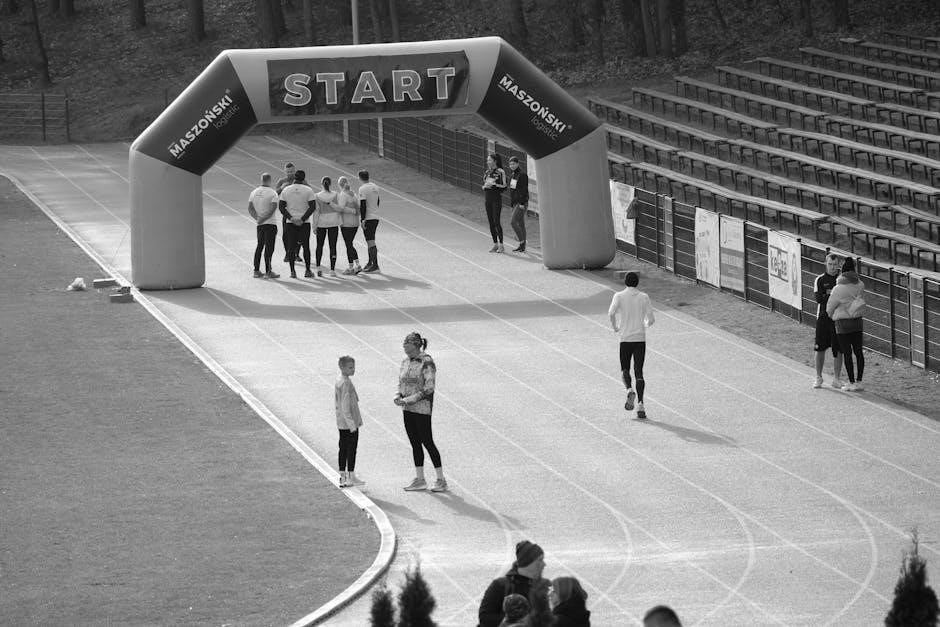
A comprehensive 10MWT PDF protocol will detail precise walkway marking procedures. Typically, a straight, unobstructed path of 10 meters is required, with clear start and stop lines.
The protocol should specify using tape or cones to delineate the walkway, ensuring consistent dimensions for each test administration. Crucially, the PDF will emphasize marking the 2-meter start and stop points, vital for accurate timing, excluding acceleration and deceleration phases.
Detailed diagrams within the PDF can visually guide clinicians in correctly setting up the walkway, promoting standardized testing and reliable data collection across different settings and patient populations.
Starting and Stopping Points (2-meter mark)
The 10MWT PDF protocol must clearly define the significance of the 2-meter marks. These points are not arbitrary; they dictate when timing commences and concludes, minimizing the influence of acceleration and deceleration on the recorded walking speed.
The PDF should illustrate precisely where to position the timer – initiating when the leading foot crosses the first 2-meter mark and stopping when it crosses the second, effectively measuring the 10-meter central portion.
Consistent application of this 2-meter rule, as detailed in the PDF, is paramount for test reliability and comparability across patients and studies.
Instructions to the Patient (Self-Paced, Maximum Speed)
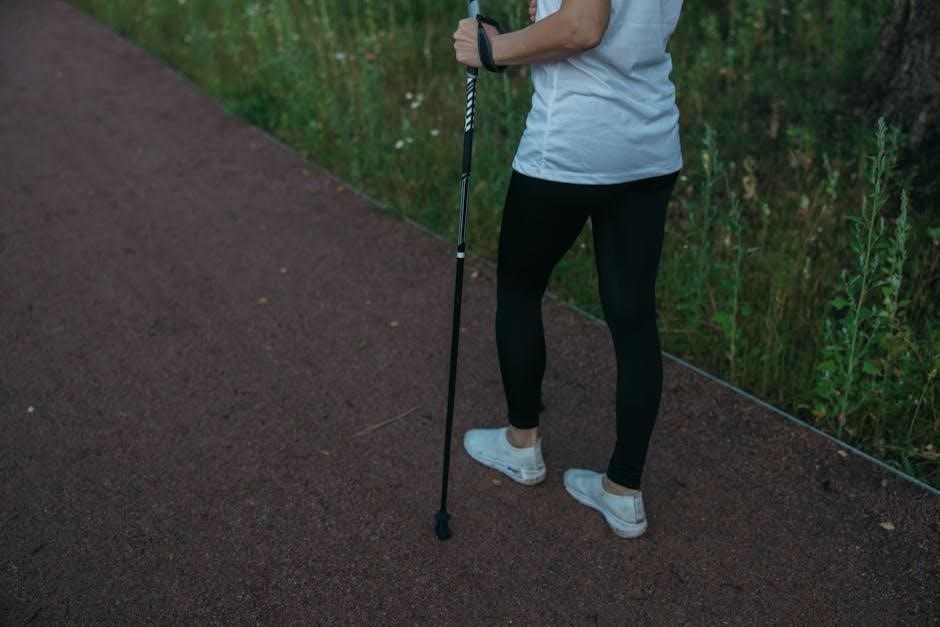
The 10MWT PDF protocol must contain standardized instructions for patients, emphasizing a self-paced walk performed at maximum speed. Clarity is vital; the PDF should state they should not start too slowly, but also avoid a false start or running.
The PDF should explicitly instruct patients to walk naturally, as they normally would, and to continue walking through the entire 10-meter distance.
For patients with aphasia, the PDF may include visual cues or simplified phrasing. Consistent delivery of these instructions, as outlined in the PDF, is crucial for valid results.
Data Collection and Measurement
The 10MWT PDF facilitates accurate data recording, including timing methods and walking speed calculations, ensuring consistent measurement across trials and patients.
Standardized data sheets within the PDF streamline the process and minimize potential errors during test administration.
Timing Methods
The 10MWT PDF protocol typically details precise timing procedures, emphasizing starting and stopping points for accurate measurement. Commonly, timing begins when the patient’s leading foot crosses the 2-meter mark, allowing for acceleration, and stops at the 8-meter mark, accounting for deceleration.
Digital timers with millisecond accuracy are recommended, and the PDF may include instructions for manual timing if digital options are unavailable. Consistent application of the timing method, as outlined in the PDF, is vital for reliability. Automated timing systems, integrated with PDF data recording, can further enhance precision and reduce human error.
Recording Walking Speed
The 10MWT PDF protocol should clearly define how walking speed is calculated, typically expressed in meters per second (m/s). This is determined by dividing the walked distance (6 meters – from 2m to 8m mark) by the recorded time in seconds.
The PDF data recording sheet will include dedicated fields for time, distance, and calculated speed for each trial. Accurate recording is paramount; the PDF may suggest double-checking calculations. Some PDF versions incorporate automated speed calculation features. Consistent units and rounding rules, as specified in the PDF, ensure data comparability.
Number of Trials
The 10MWT PDF protocol typically recommends performing multiple trials – commonly three to five – to enhance the reliability of the assessment. The PDF should specify whether to use the average of all trials or a specific number for final data analysis.
Rest periods between trials, as outlined in the PDF, are crucial to minimize fatigue influencing performance. The PDF data recording sheet will provide space to record the time for each trial individually. A PDF may also include guidance on when to terminate trials if the patient demonstrates significant variability or fatigue.

Considerations for Specific Patient Populations
PDF protocols should detail adaptations for diverse groups, like stroke patients with aphasia or post-arthroplasty individuals, ensuring safe and effective 10MWT administration.
Specific PDF guidance addresses assistance provision and modified instructions for pediatric populations, optimizing test validity across varying abilities.
Stroke Patients (Aphasia Considerations)
PDF protocols for the 10MWT in stroke patients, particularly those with aphasia, must prioritize clear communication strategies. Visual cues and demonstrations are essential, supplementing verbal instructions to overcome language barriers.
The PDF should include simplified instructions, potentially utilizing pictures or symbols to illustrate the test procedure – walk at a self-selected, maximum pace. Allowing extra time for comprehension and response is crucial.
Protocols should explicitly address how assistance will be offered and documented, ensuring consistency. The PDF should also outline methods for confirming patient understanding before initiating the test, promoting accurate and reliable results.
Post-Total Hip Arthroplasty Patients
PDF protocols for the 10MWT with post-total hip arthroplasty patients should detail pre-test assessment of pain levels and assistive device use. Clear guidelines on permissible assistive devices (walkers, canes) are vital for standardized testing.
The PDF must specify if the test is conducted indoors or outdoors, noting potential surface variations impacting performance. Instructions should emphasize a self-paced, maximum speed walk, while acknowledging potential limitations due to surgical recovery.
Documenting any deviations from standard protocol, such as observed limping or altered gait patterns, within the PDF’s data recording section is crucial for comprehensive rehabilitation monitoring.
Pediatric Populations (Typically Developing Children)
PDF protocols for the 10MWT in typically developing children must address age-appropriate instructions and motivation techniques. The document should clearly state the importance of verbal encouragement to achieve maximum effort during the walk.
A PDF guide should emphasize the need to account for acceleration and deceleration phases, potentially recommending a longer walkway (e.g., 14 meters) with timing focused on the central 10 meters.
The protocol must detail how to address potential errors, like inconsistent starting positions, and highlight that overestimation can occur if the entire pathway is timed.
Interpreting 10MWT Results
PDF protocols aid in interpreting results by providing normative data, enabling clinicians to identify functional limitations and track patient progress over time effectively.
Normal Values and Ranges
Establishing normal values for the 10-Meter Walk Test (10MWT) is complex, varying based on age, sex, and health status; A PDF protocol often includes reference ranges, though these should be used cautiously. Generally, healthy adults exhibit walking speeds exceeding 1.2 m/s.
However, values are significantly lower in populations with neurological conditions like stroke, where speeds might range from 0.3 to 0.8 m/s. Post-total hip arthroplasty patients demonstrate improvement over time, with initial speeds around 0.6-0.9 m/s.
PDF resources emphasize that interpreting results requires considering the individual’s baseline function and comparing to age-matched peers, not absolute norms.
Identifying Functional Limitations
The 10-Meter Walk Test (10MWT), detailed within a PDF protocol, effectively identifies functional limitations impacting mobility. Reduced walking speed often indicates impaired balance, muscle weakness, or limited range of motion.
For stroke patients, slower speeds can correlate with aphasia-related communication barriers hindering test instructions. Post-arthroplasty, the 10MWT reveals limitations in weight-bearing and gait mechanics.
A PDF guide assists clinicians in linking walking speed to specific functional tasks, like navigating obstacles or ascending stairs. Observing gait deviations during the test, documented in the PDF, further clarifies limitations.
Tracking Progress Over Time
The 10-Meter Walk Test (10MWT), when consistently administered using a standardized PDF protocol, is invaluable for tracking patient progress during rehabilitation. Serial measurements reveal improvements in walking speed, indicating enhanced strength, balance, and coordination.
A PDF-based data recording sheet facilitates easy comparison of results over time, visually demonstrating treatment effectiveness. For post-arthroplasty patients, the 10MWT monitors recovery milestones.
In neurological conditions, tracking changes helps adjust therapy. The PDF protocol ensures consistent testing, minimizing variability and providing reliable data for longitudinal assessment.

Enhancing Reliability and Validity
Utilizing a standardized PDF protocol minimizes acceleration/deceleration effects and ensures consistent instructions, boosting test reliability and validity for accurate data.
Minimizing Acceleration and Deceleration Effects
A well-structured 10MWT PDF protocol addresses acceleration and deceleration impacts on walking speed measurements. Standardized protocols often recommend measuring the time taken to walk a central 10-meter section of a longer walkway – typically 14 meters – to mitigate these effects.
This approach allows patients sufficient distance to reach a consistent, self-selected walking pace before timing commences, and to decelerate naturally before stopping. The PDF should clearly illustrate the walkway markings, specifically highlighting the 2-meter start and end points for timing, ensuring consistent application across all assessments.
Detailed instructions within the PDF guide clinicians to consistently implement this methodology, improving the test’s precision and reducing variability due to initial acceleration or final deceleration phases.
Standardizing Instructions
A comprehensive 10MWT PDF protocol is vital for standardized instructions, ensuring consistent test administration. The PDF should clearly articulate that patients are to walk at their “self-paced maximum speed,” avoiding ambiguity. Specific phrasing, such as “walk as quickly as you safely can,” should be included.
The protocol must detail instructions for patients with aphasia, potentially utilizing visual cues or simplified language within the PDF. It should emphasize that no practice trials are permitted before formal data collection.
Furthermore, the PDF should outline what to say and what not to say to patients, minimizing extraneous cues that could influence performance and maximizing test reliability.
Addressing Potential Errors in Measurement
A detailed 10MWT PDF protocol should proactively address potential measurement errors. It must specify precise timing procedures – when to start (toes crossing the 2-meter mark) and stop timing – to minimize inter-rater variability. The PDF should emphasize consistent stopwatch use and digital timing systems where available.
The protocol needs to outline procedures for recording times accurately, including decimal places. It should also address potential errors related to acceleration and deceleration effects, recommending a 10-meter scoring zone within a longer walkway.
Finally, the PDF should include a checklist for the examiner to verify proper procedure adherence.
The 10MWT PDF Protocol: Key Components
A comprehensive 10MWT PDF includes sections for patient details, clear test administration instructions, and a dedicated data recording sheet for efficient documentation.
Patient Information Section
The patient information section within a 10MWT PDF protocol is paramount for accurate record-keeping and tracking individual progress. This section should systematically capture essential demographic data, including the patient’s name, date of birth, medical record number, and relevant medical history – specifically conditions impacting mobility.
Furthermore, details regarding the patient’s current medications, any pre-existing neurological or orthopedic impairments, and a brief description of their functional status prior to the test are crucial.
Including a space to document informed consent confirmation ensures ethical practice. A well-structured patient information section within the PDF facilitates comprehensive data analysis and personalized care planning.
Test Administration Instructions
The Test Administration Instructions section of a 10MWT PDF protocol details the standardized procedure for conducting the test. It must clearly outline the pre-test patient preparation, emphasizing the importance of comfortable clothing and appropriate footwear.
Detailed guidance on walkway setup, including marking the start and stop points (specifically the 2-meter mark for timing), is essential. The PDF should explicitly instruct the administrator to explain the test to the patient – emphasizing a self-paced, maximum speed walk.
Clear instructions regarding assistance provision, safety precautions, and timing procedures are vital for reliable and valid results;
Data Recording Sheet
The Data Recording Sheet within a 10MWT PDF protocol is a crucial component for systematic data collection. It should include dedicated fields for essential patient demographics – name, age, diagnosis, and relevant medical history.
Specific columns must be present for recording each trial’s walking speed, calculated from the time taken to traverse the 10-meter distance. The PDF should also provide space to note any assistance provided during the walk, and any observed gait abnormalities or deviations from the standard procedure.
Space for recording the number of trials completed is also essential for comprehensive data analysis.

Assistance and Safety During the Test
A 10MWT PDF protocol details when and how to provide assistance, prioritizing patient safety. It outlines supervision requirements and necessary precautions during testing.
When and How to Provide Assistance
A comprehensive 10MWT PDF protocol explicitly addresses assistance provision, recognizing varying patient needs; Assistance should only be given if a patient demonstrates instability or expresses concern about falling, maintaining test validity.
The protocol details acceptable assistance types – minimal touch at the elbow or upper arm – avoiding full body support that alters natural gait. Documentation within the PDF is crucial, noting any assistance provided during each trial.
Stroke-specific protocols, often found in PDF format, emphasize allowing patients with aphasia to indicate needs non-verbally, ensuring safe participation. The goal is to measure functional ability, offering support only when absolutely necessary to prevent injury.
Safety Precautions
A detailed 10MWT PDF protocol prioritizes patient safety, outlining essential precautions. The testing area must be clear of obstacles, ensuring a hazard-free walkway. Staff should be trained to recognize signs of distress, like dizziness or excessive fatigue, and prepared to intervene.
The PDF should emphasize appropriate footwear – secure, low-heeled shoes – to minimize fall risk. Patients with a history of falls require closer supervision. Protocols for specific populations, like post-arthroplasty patients, detailed in PDF guides, may include specific weight-bearing restrictions.
Having a readily available emergency plan and ensuring adequate lighting are vital safety components detailed within a standardized PDF protocol.
Supervision Requirements
A comprehensive 10MWT PDF protocol clearly defines supervision levels. At a minimum, one trained healthcare professional should oversee the test, observing for safety and adherence to instructions. For patients with neurological conditions, like stroke, or those with balance impairments, increased supervision is crucial.
The PDF should specify whether assistance is permitted and, if so, the type allowed (e.g., minimal physical support). Protocols for pediatric populations, often detailed in PDF format, may require a parent or guardian present.
Consistent application of supervision guidelines, as outlined in the PDF, enhances test reliability and ensures patient well-being throughout the assessment.

Advanced Applications of the 10MWT
PDF protocols facilitate combining the 10MWT with assessments like the Timed Up and Go, enriching data for comprehensive evaluations in research and clinical settings.
Combining with Other Assessments (Timed Up and Go)
Utilizing a standardized 10MWT PDF protocol alongside the Timed Up and Go (TUG) provides a more holistic view of a patient’s functional mobility. The TUG assesses dynamic balance and assesses the time taken to rise from a chair, walk three meters, turn, and sit back down.
Combining these tests offers complementary information; the 10MWT focuses on maximal walking speed, while the TUG evaluates functional tasks requiring balance and coordination. A PDF ensures consistent administration of both tests, improving data comparability. This combined approach is particularly valuable post-stroke or after total hip arthroplasty, allowing clinicians to pinpoint specific deficits and track rehabilitation progress effectively.
Research Applications
A well-defined 10MWT PDF protocol is invaluable in research settings, ensuring data consistency across multiple sites and investigators. It facilitates studies investigating the effectiveness of interventions for neurological conditions like stroke, or orthopedic procedures such as total hip arthroplasty.
Researchers utilize the 10MWT to quantify changes in gait speed and functional mobility following treatment. Standardized PDF protocols minimize variability, enhancing the reliability and validity of research findings. Furthermore, the test’s simplicity and low cost make it a practical tool for large-scale studies, contributing to evidence-based practice and improved patient care.
Monitoring Treatment Effectiveness
Utilizing a standardized 10MWT PDF protocol allows clinicians to objectively track a patient’s progress throughout rehabilitation. Serial measurements, documented within the PDF, reveal changes in walking speed, indicating response to therapy. This is particularly useful post-stroke or after total hip arthroplasty, where improvements in gait are key goals.
The PDF provides a clear record of performance over time, facilitating informed clinical decision-making. By comparing results to baseline and established norms, therapists can adjust treatment plans to maximize functional outcomes. Consistent application of the protocol ensures accurate monitoring and demonstrates the value of interventions.